

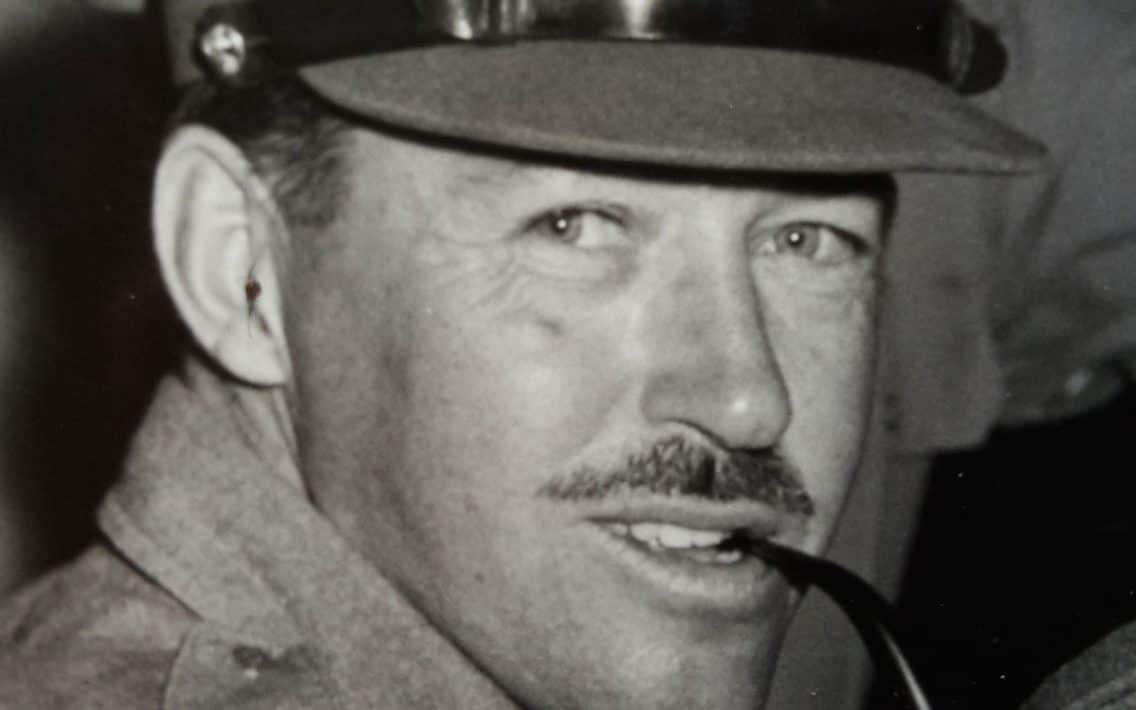
I’ve just read the delightful military biography of Colonel Tony Fowle MC, covering his years of military service between joining up in 1939 and the Korean War in 1951, based on 232 letters he wrote to his parents during his long sojourns abroad, in Iraq, Iran, India, Pakistan and Korea. Its is beautifully written by Rupert Willoughby and wonderfully produced by the impressive Chiselbury. Its not a long book: it’ll take a day of reading to get through its 300 pages, but it is a very rewarding read. Willoughby has perfectly captured his man, and the context he paints of India at war and then going through the trauma of Partition, is perfectly done. Tony Fowle enlisted aged 18 in 1939 and ended up a subaltern in the Indian Mountain Artillery: his first Battery Commander was in fact the famed Dick Yeo, of Kohima fame, who received his second DSO for acting as the FOO on Kohima ridge between 5th and 20th April 1944 calling in the 8 x 3.7-inch mountain guns of 24th Mountain Regiment in defence of the c. 1,500 Indian and British defenders. The guns saved Kohima.
After not as much excitement in the war as he would have liked, he probably had more than he bargained for in Korea as, on 3 January 1951, three months before the Battle of the Imjin River, he was manning a forward observation post with the Royal Ulster Rifles when two Chinese Divisions attacked on a brigade front strung out across four miles of mountainous terrain. Part of 45th Field Regiment, the guns fired all day into vast numbers of singing Chinese troops. Forced to withdraw at night in the terrible winter, surrounded by Chinese, in what became known as the Battle of Chaegunghyon, 200-men were lost. Fowle described the experience as hell, and astonished to come out of it alive.
Three months later he was on the Imjin River supporting a Belgian Battalion that was part of the Commonwealth 29th Brigade. What follows is from his Obituary in 2016:
The Belgians had been cut off by infiltrating Chinese and were two miles ahead of the main line and on the north side of the Imjin River. At eight o’clock that evening, they were attacked by more than 10,000 Chinese supported by artillery and mortar fire. Fowle’s troop was firing at the massed hordes over open sights and managed to hold on throughout the night and the next day. When it became obvious that all would be lost if they did not pull out, they made a dash for it across country. The Belgian infantry swam across the river, escaped into the mountains and got clear. Fowle’s troop, however, could not do the same without allowing their guns and vehicles to fall into the hands of the enemy, so they charged across the single pontoon bridge, which was already surrounded by Chinese. The bridge came under withering machine-gun fire, but all the guns and vehicles except one got through and not a single man was lost. After a hectic 12-mile drive across open fields in the dark, they found their way back to their own lines.
Three days and nights of continual action followed. Every morning, the battery found itself surrounded and was forced to fight its way out of a trap. The ferocity of the battle – in which tank commanders sprayed their own units with machine-gun fire to clear them of swarms of enemy that were clambering over them, and infantry, dug into underground bunkers and in danger of being overrun, called down artillery fire on their own positions – caught the imagination of the world.
I loved this book. I am certain you will too.


