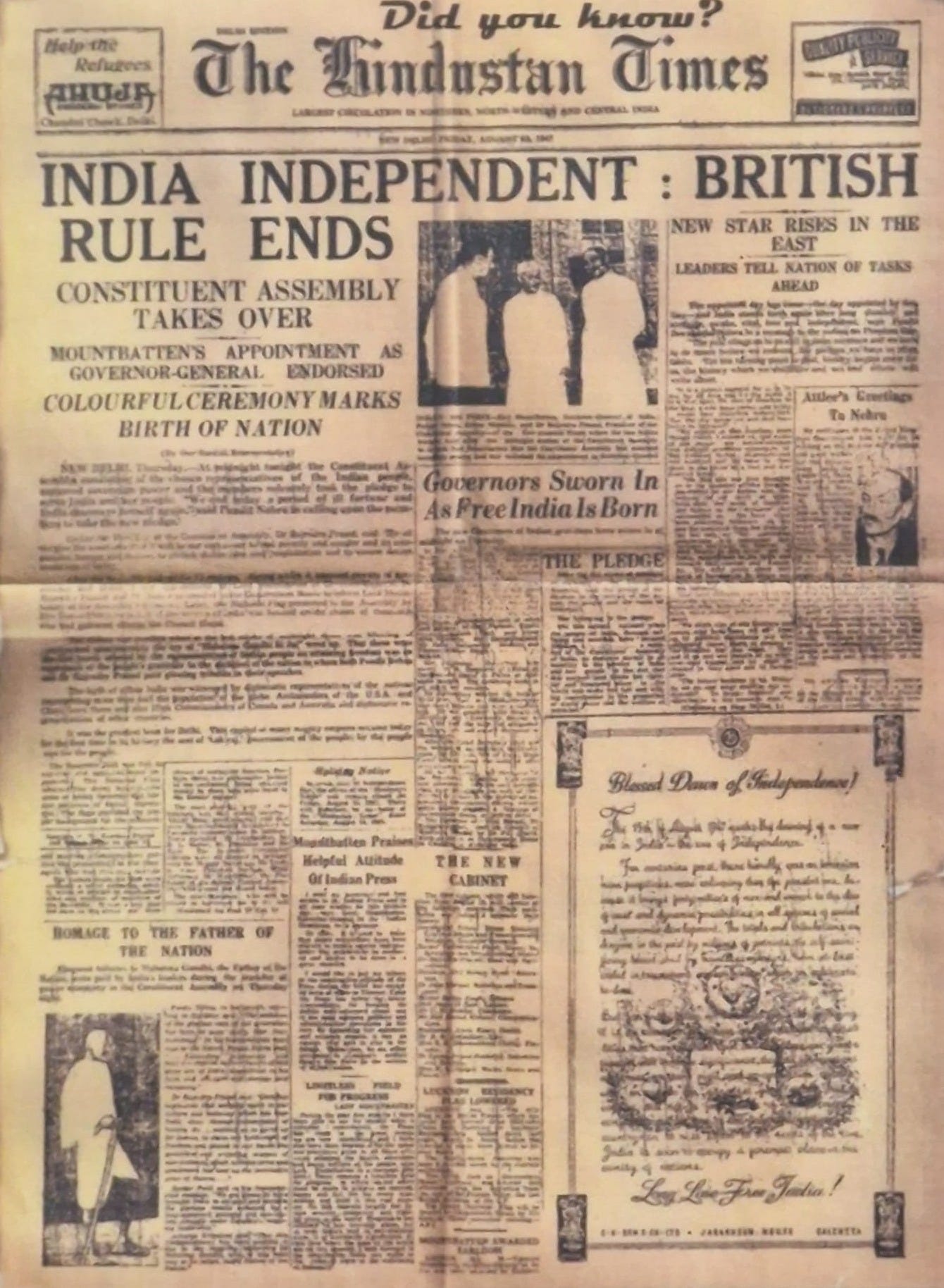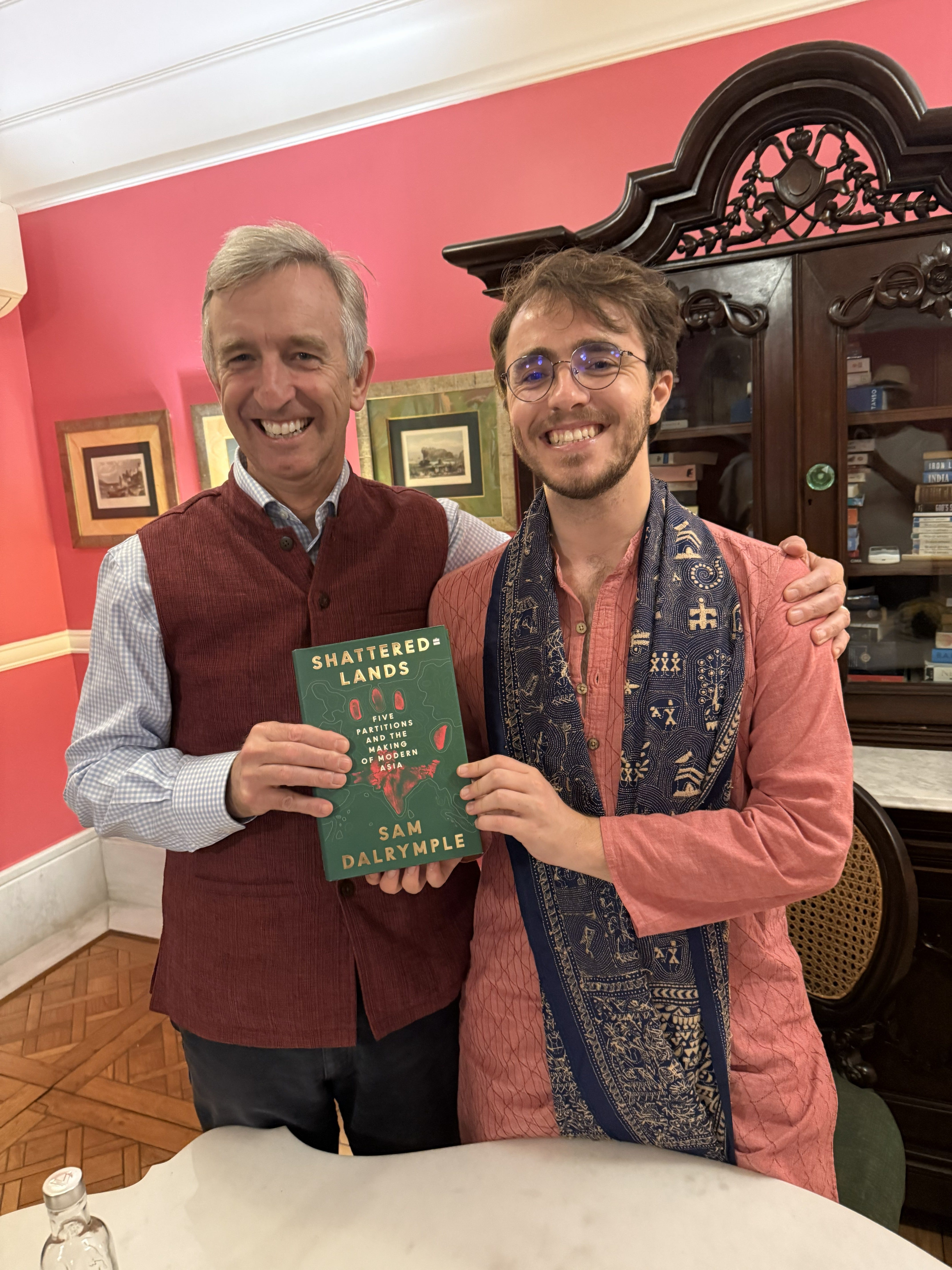
This has to be one of my favourite books of the year. It’s fabulously written and, although the description of the battle of Kohima is not good (and one of the maps will seriously annoy the Americans who constituted the major part of the Northern Combat Area Command) these are minor annoyances, for the book is brilliantly conceived and on the whole extremely well executed. The theme is the deconstruction of the old (1858-1947) British Indian Empire, part of which was the British Raj and part of which were the old 576 Princely States, into modern South Asia, a process which Dalrymple tells us started in 1935 and didn’t end until 1971. Its quite a sweep, with lots of fascinating history from start to finish. He tells the story very well, resisting the temptation of many of his peers to jump on one bandwagon or the other, and refusing to tell the story of the greatest change in regional history for several hundred years through a single political, ethnic or religious prism. In this he has produced a triumph of balanced (in as much as this is humanely possible), narrative history. It’s genuinely a real pleasure to read.
Indeed, one of the great strengths of this book is that Sam doesn’t preach, telling his story as dispassionately as any historian can through the emotional vistas of a vast sweep of history ravaged by ethnic and religious nationalism, not to mention the political implications of the Raj and the actual power held by the feudal lords of the old princely states. To take but one example, he deals with the Bengal famine, for instance, very well, reminding us of the Mizo and then Bangladeshi famines which followed long after independence. When I taught the famine - a travesty of civil mismanagement - I would always ask ‘And where was the government of West Bengal in all of this?’ Silence, usually. Few of my students knew that West Bengal even had its own government. It was always easier just to blame London. In 1943 the Government of West Bengal wasn’t merely useless; it was partisan. It was also Bengali. History! Its messy…
The story of the end of empire is one that many people in the UK and India/Pakistan/Bangladesh think they understand, but few really do, as the complexities of what we collectively term ‘the Raj’ have largely been forgotten in a simplistic, moralising singularity of Britain (always in charge, and always bad) on the one side and India (always oppressed, and morally good) on the other. This isn’t just the case in popular culture, but in elite circles too, muddied by the swirling waters of decolonisation activism that reduces the history of the British Empire to impossible absurdities and ridiculous simplifications. These oversimplifications, de rigeur in the current U.K. academy, simply do not understand the ethnic and religious tensions that Dalrymple brilliantly describes, for example, in the end of Pakistani unity in 1971, and the rejection by Bengali-speaking Muslims of Urdu-speaking Muslim sovereignty in West Bengal, now Bangladesh. History! Its messy.
There’s lots more to say, but why don’t you read the book for yourself? It is definitely a book to slip into your stocking for Christmas. Better still, get a friend to buy it for you. You’ll thank them for it.